Showing posts with label PDD. Show all posts

Autism 911: Help for a family in chaos

By Linda Saether, CNN Medical Producer

CARD Note: You can follow the Bilsons' progress on CNN American Morning 6 a.m. to 9 a.m. through February 4.

Seal Beach, CALIFORNIA (CNN) -- The Bilson family is like many other families: three kids, a cat, and a small, lovely home with lots of family photos and carved wooden wall signs with sayings like "Live, Laugh, Love."

But step inside their house after 4 p.m. most weekdays and you'll want to cover your ears because of the noise -- the screaming, to be exact. These are not the shouts of sibling rivalry or parental annoyance. This is the high-pitched, ear-shattering sound of a 13-year-old girl. More accurately, it is the sound of a frustrated, irritated, very loud teenager with autism.

Marissa, the middle Bilson child, was diagnosed with autism when she was a toddler. Her mother, Mary, a nurse, knew something wasn't right early on, when young Marissa's tantrums were off the charts and seemingly unwarranted.

But during the first few years, doctors told Mary Bilson that her daughter was fine and this behavior would eventually pass. They were wrong on both counts.
Marissa's behavior has not passed; it has, in fact, become worse. According to Bilson, Marissa and her tantrums rule the household. "I don't want to hear her screaming and tantruming, so we pretty much let her do what she wants," Bilson says. "We" means Mary, her husband, John, and their two other children, Brittany, 15, and 6-year-old Brendan.

Keeping the peace means that, when it comes to Marissa, the rules are different. She is allowed unlimited time on the one family computer. She is allowed access to her siblings' rooms and possessions. She is allowed to eat dinner at the computer instead of the family table.


But before you sit in judgment of the Bilsons, and suggest they just need a firm hand to keep their middle child in line, consider one thing: They are trying to cope with a child with severely impaired social sensibilities.

"Do you think people who don't have children with autism know how tough it is to deal with them?" CNN's senior medical correspondent, Elizabeth Cohen, asked Marissa's mom in a recent interview. "No," Mary Bilson replied. "And I don't see how they could."

She's right -- we can't, because many of us have never seen autism in action, day in and day out.


Autism is described on the National Institutes of Health Web site as a "developmental disorder that appears in the first three years of life, and affects the brain's normal development of social and communication skills." According to the Centers for Disease Control and Prevention, autism and related disorders affect about one out of every 150 babies born each year.

Autism manifests itself in many different ways. Although there are some common threads, like language issues, repetitive movements and difficulties connecting to others, specific behavioral patterns are largely unique to the individual. "Children with autism are all different; they are like snowflakes," explains Dr. Ronald Leaf, co-director of the group Autism Partnership.

The one thing that Leaf believes they all have in common is that "they are not expected to do enough." Leaf insists we have set the bar too low for what we think children and adults with autism can do. "They are highly teachable," he says. "You just have to have a good teacher."

A good teacher is exactly what Bilson was looking for to help her with Marissa. The family had already tried various programs, starting when Marissa was a toddler -- but nothing completely worked for her. And as Marissa entered her teen years, her behavior grew worse. Mary knew that her daughter needed to be reined in, and it needed to be done now.

"She is getting older. She's 13 and her tantrums are louder and longer than they used to be. It's just so inappropriate. It was OK when she was much younger, but now that she's going to be an adult soon, she can't be behaving this way," Bilson says with tired resignation.

But what could the Bilsons do? This family doesn't have a lot of extra money, and most programs either aren't covered by insurance or have long waiting lists. The costs are staggering, according to the Web site FightingAutism.org. Families with autistic children can expect to spend $30,000 annually to provide proper medical, educational and other assistance necessary for dealing with an autistic child.

Enter Autism Partnership, or AP. This group, founded in 1994, offers extensive therapeutic services to children and adults with the disorder. One of its most unique programs is an intensive one-on-one, at-home intervention service that is similar in scope to what happens on the television show "Nanny 911." It's not cheap -- about $2,500 per day, typically for a five-day period (with additional days on an "as needed" basis).

Most of AP's work is grounded in a behavior modification technique known as Applied Behavioral Analysis or ABA. Essentially, the method breaks down behavior patterns, rewarding proper behavior while being careful not to encourage improper responses.

And that is exactly how AP therapist Rick Schroeder hopes to reshape Marissa Bilson's worst behavior. The group, which met Marissa while working in her school, offered the Bilson family a free week-long intervention with the proviso that CNN be allowed to record the process.

The week started off with a day of observation -- a day with lots and lots of screaming and tantrums, that left Schroeder stunned. He had observed Marissa at school where, he says, she was much less demonstrative.

But Schroeder is still eager and ready to tackle the challenge. "I think the family is starting to realize something needs to change, and that's very good," he says after his day of observation. "As far as Marissa's behavior goes -- and the level that she is capable of going to -- she's pretty much out of control, for sure."

Researchers May Have Answers for the Rise in Autism

A study published in the journal Epidemiology this month by Irva Hertz-Picciotto and Lora Delwiche offers some definitive answers to a decades-long debate concerning the rise in autism.

Over the past 20 years there have been increasing reports of a rise in cases of autism. Many considered these reports evidence of an epidemic and pointed to various factors such as environmental toxins to explain the rise in autism. However, there were many other factors that could explain this rise. Among the most frequently cited explanations to discount an actual rise in autism were the methods used to diagnose new cases of autism, inclusion of milder cases of autism, earlier age of diagnosis, and poor methods for estimating prevalence.

Many in the autism community felt these explanations were insufficient and offered counterarguments and reanalyses of datasets. And thus the debate continued with few clear answers.

The study by Hertz-Picciotto and Delwiche evaluated all clients of the Department of Developmental Services Regional Centers in California aged 3 years and older for the period of 1990 through 2006. For children under 3, records from the Early Start Report were used for a similar time period.

The authors controlled for a number of confounds that previous studies failed to do. The interested reader is encouraged to read their study as the description of their methods was very thorough (The Rise in Autism and the Role of Age at Diagnosis. Epidemiology, 20, 84-90). All in all, the study represents the most rigorous analysis of the rise in autism that has been published to date.

Their study found that since the early 1990’s the incidence of autism rose 7 to 8 fold. They discuss that “…changes in diagnostic criteria, the inclusion of milder cases, and an earlier age at diagnosis, during this period suggests that these factors probably contribute 2.2-, 1.5-, and 1.24 – fold increases in autism, respectively, and hence cannot fully explain the magnitude of the rise in autism”. This leaves a 2- to 3-fold increase in the incidence of autism.

The authors conclude “…the current occurrence of autism, a seriously disabling disorder in young children, at rates of greater than 30 per 10,000 individuals – and still rising in California – is a major public health and educational concern”.

We here at CARD would certainly agree.


Dennis Dixon, Ph.D.
Research and Development Manager
Center for Autism and Related Disorders, Inc.

Dr. Doreen Granpeesheh on How Biomedical Intervention Improves ABA Success


Autism Action Plan founder Dr. Kurt Woeller interviews Doreen Granpeesheh, PhD, BCBA at the Defeat Autism Now (DAN!) conference.

Interview - Part One

Also:

Want to view other indepth interviews on autism by Dr. Granpeesheh? Click here.

You can also visit: www.centerforautism.com.

Positive Behavior Management: Tips for Parents and Professionals

Presented by Jonathan Tarbox, PhD ,BCBA
CARD Research and Development Director

Click here to see his complete presentation.

What is ABA?

What is Applied Behavior Analysis?

Behavior Analysis is the scientific study of behavior. Applied Behavior Analysis (ABA) is the application of the principles of learning and motivation from Behavior Analysis, and the procedures and technology derived from those principles, to the solution of problems of social significance. Many decades of research have validated treatments based on ABA.

The Report of the MADSEC Autism Task Force (2000) provides a succinct description, put together by an independent body of experts:

Over the past 30 years, several thousand published research studies have documented the effectiveness of ABA across a wide range of:

  • populations (children and adults with mental illness, developmental disabilities and learning disorders)
  • interventionists (parents, teachers and staff)
  • settings (schools, homes, institutions, group homes, hospitals and business offices), and
  • behaviors (language; social, academic, leisure and functional life skills; aggression, selfinjury, oppositional and stereotyped behaviors)

Applied behavior analysis is the process of systematically applying interventions based upon the principles of learning theory to improve socially significant behaviors to a meaningful degree, and to demonstrate that the interventions employed are responsible for the improvement in behavior (Baer, Wolf & Risley, 1968; Sulzer-Azaroff & Mayer, 1991).

“Socially significant behaviors” include reading, academics, social skills, communication, and adaptive living skills. Adaptive living skills include gross and fine motor skills, eating and food preparation, toileting, dressing, personal self-care, domestic skills, time and punctuality, money and value, home and community orientation, and work skills.

ABA methods are used to support persons with autism in at least six ways:

1. to increase behaviors (eg reinforcement procedures increase on-task behavior, or social interactions);

2. to teach new skills (eg, systematic instruction and reinforcement procedures teach functional life skills, communication skills, or social skills);

3. to maintain behaviors (eg, teaching self control and self-monitoring procedures to maintain and generalize job-related social skills);

4. to generalize or to transfer behavior from one situation or response to another (eg, from completing assignments in the resource room to performing as well in the mainstream classroom);

5. to restrict or narrow conditions under which interfering behaviors occur (eg, modifying the learning environment); and

6. to reduce interfering behaviors (eg, self injury or stereotypy).

ABA is an objective discipline. ABA focuses on the reliable measurement and objective
evaluation of observable behavior.

Reliable measurement requires that behaviors are defined objectively. Vague terms such as anger, depression, aggression or tantrums are redefined in observable and quantifiable terms, so their frequency, duration or other measurable properties can be directly recorded (Sulzer-Azaroff & Mayer, 1991). For example, a goal to reduce a child’s aggressive behavior might define “aggression” as: “attempts, episodes or occurrences (each separated by 10 seconds) of biting, scratching, pinching or pulling hair.” “Initiating social interaction with peers” might be defined as: “looking at classmate and verbalizing an appropriate greeting.”

ABA interventions require a demonstration of the events that are responsible for the occurrence,
or non-occurrence, of behavior. ABA uses methods of analysis that yield convincing, reproducible, and conceptually sensible demonstrations of how to accomplish specific behavior changes (Baer & Risley, 1987). Moreover, these behaviors are evaluated within relevant settings such as schools, homes and the community. The use of single case experimental design to evaluate the effectiveness of individualized interventions is an essential component of programs based upon ABA methodologies. This is a process that includes the following components:

a) selection of interfering behavior or behavioral skill deficit

b) identification of goals and objectives

c) establishment of a method of measuring target behaviors

d) evaluation of the current levels of performance (baseline)

e) design and implementation of the interventions that teach new skills and/or reduce interfering behaviors

f) continuous measurement of target behaviors to determine the effectiveness of the intervention, and

g) ongoing evaluation of the effectiveness of the intervention, with modifications made as necessary to maintain and/or increase both the effectiveness and the efficiency of the intervention. (MADSEC, 2000, p. 21-23)

As the MADSEC Report describes above, treatment approaches grounded in ABA are now considered to be at the forefront of therapeutic and educational interventions for children with autism. The large amount of scientific evidence supporting ABA treatments for children with autism have led a number of other independent bodies to endorse the effectiveness of ABA, including the U.S. Surgeon General, the New York State Department of Health, the National Academy of Sciences, and the American Academy of Pediatrics (see reference list below for sources).

Discrete Trial Training

Discrete trial training (DTT) is a particular ABA teaching strategy which enables the learner to acquire complex skills and behaviors by first mastering the subcomponents of the targeted skill. For example, if one wishes to teach a child to request a a desired interaction, as in "I want to play," one might first teach subcomponents of this skill, such as the individual sounds comprising each word of the request, or labeling enjoyable leisure activities as "play." By utilizing teaching techniques based on the principles of behavior analysis, the learner is gradually able to complete all subcomponent skills independently. Once the individual components are acquired, they are linked together to enable mastery of the targeted complex and functional skill. This methodology is highly effective in teaching basic communication, play, motor, and daily living skills.

Initially, ABA programs for children with Autism utilized only (DTT), and the curriculum focused on teaching basic skills as noted above. However, ABA programs, such as the program implemented at CARD, continue to evolve, placing greater emphasis on the generalization and spontaneity of skills learned. As patients progress and develop more complex social skills, the strict DTT approach gives way to treatments including other components.

Specifically, there are a number of weaknesses with DTT including the fact the DTT is primarily teacher initiated, that typically the reinforcers used to increase appropriate behavior are unrelated to the target response, and that rote responding can often occur. Moreover, deficits in areas such “emotional understanding,” “perspective taking” and other Executive Functions such as problem solving skills must also be addressed and the DTT approach is not the most efficient means to do so.

Although the DTT methodology is an integral part of ABA-based programs, other teaching strategies based on the principles of behavior analysis such as Natural Environment Training (NET) may be used to address these more complex skills. NET specifically addresses the above mentioned weaknesses of DTT in that all skills are taught in a more natural environment in a more “playful manner.” Moreover, the reinforcers used to increase appropriate responding are always directly related to the task (e.g., a child is taught to say the word for a preferred item such as a “car” and as a reinforcer is given access to the car contingent on making the correct response). NET is just one example of the different teaching strategies used in a comprehensive ABA-based program. Other approaches that are not typically included in strict DTT include errorless teaching procedures and Fluency-Based Instruction.

At CARD all appropriate teaching approaches based on the well grounded principles of applied behavior analysis are utilized.

References

Baer, D., Wolf, M., & Risley, R. (1968). Some current dimensions of applied behavior analysis. Journal of Applied Behavior Analysis, 1, 91 - 97.

Baer, D., Wolf, M., & Risley, R. (1987). Some still-current dimensions of applied behavior analysis. Journal of Applied Behavior Analysis, 20, 313 - 327.

Maine Administrators of Services for Children with Disabilities (MADSEC) (2000). Report of the MADSEC Autism Task Force.

Myers, S. M., & Plauché Johnson, C. (2007). Management of children with autism spectrum disorders. Pediatrics, 120, 1162-1182.

National Academy of Sciences (2001). Educating Children with Autism. Commission on Behavioral and Social Sciences and Education.

New York State Department of Health, Early Intervention Program (1999). Clinical Practice Guideline: Report of the Recommendations: Autism / Pervasive Developmental Disorders: Assessment and Intervention for Young Children (Age 0-3 years).

Sulzer-Azaroff, B. & Mayer, R. (1991). Behavior analysis for lasting change. Fort Worth, TX : Holt, Reinhart & Winston, Inc.

US Department of Health and Human Services (1999). Mental Health: A Report of the Surgeon General. Rockville, MD: U.S. Department of Health and Human Services, Substance Abuse and Mental Health Services Administration, Center for Mental Health Services, National Institutes of Health, National Institute of Mental Health.

Autism Glossary - What it All Means

A
ABA: Applied Behavior Analysis

ABC: Autism Behavior Checklist - a diagnostic tool

ADA: Americans with Disabilities Act

ADD: Attention Deficit Disorder

ADHD: Attention Deficit Hyperactivity Disorder

ADI: Autism Diagnostic Interview - a diagnostic tool developed in London by the Medical Research Council

ADOS: Autism Diagnostic Observation Scale

AIT: Auditory Integration Training

AS: Asperger's Syndrome

ASA: Autism Society of America

ASD: Autism Spectrum Disorders


ASL: American Sign Language

C
CARS: Childhood Autism Rating Scale

CBCL: Achenbach Childhood Behavior Checklist - a diagnostic tool
CHAT: Checklist for Autism in Toddlers - a diagnostic tool

D
DAN Doctor: a physician who uses the DAN protocol to diagnose autism

DAN Protocol: an assessment protocol that examines the underlying disorders causing autism

DD: Developmental DisabilitiesDVD: Developmental Verbal Dyspraxia

E
EEG: ElectroencephalogramELAP: Early Learning Accomplishment Profile - an evaluation tool

F
FC: Facilitated CommunicationFCT: Facilitated Communication Training

G
GARS: Gilliam Autism Rating Scale

H
HFA: High-functioning Autistic

I
ICF: Intermediate Care Facility

IDEA: Individuals with Disabilities Act

IEP: Individualized Education Plan

IFSP: Individualized Family Service Plan

IHP: Individualized Habilitation Program

IPP: Individual Program Plan

L
LCSW: Licensed Clinical Social WorkerLRE: Least Restrictive Environment

M
MSDD: Multi-System Developmental Disorder

N
NT: Neurologically Typical or Neurotypical

NOS: Not Otherwise Specified

O
OCD: Obsessive Compulsive DisorderODD: Oppositional Defiant DisorderOT: Occupational Therapist

P
PDD: Pervasive Developmental Disorder

PDD NOS: Pervasive Developmental Disorder Not Otherwise Specified

PECS: Picture Exchange Communication System

PEP: Psycho-educational Profile

PEP-R: Psycho-educational Profile Revised

PRT: Pivotal Response Training

PT: Physical Therapy

S
SAS: Specialized Autism Services

SI: Sensory Integration

SIB: Self-Injurious Behavior

SIT: Sensory Integration Therapy

T
TEACCH: Treatment and Education of Autistic and Related Communication Handicapped Children

Dr. Doreen Granpeesheh Appears on California PBS Talk Show this Week

Orange, CA – Doreen Granpeesheh, PhD, BCBA, Founder and Executive Director of the Center for Autism and Related Disorders, Inc. (CARD) will once again be featured on the KOCE – PBS (California) award-winning talk show, Dialogue with Doti and Dodge. The show, hosted by Jim Doti and Kristina Dodge airs tonight, December 09, at 11:30pm, and again this Sunday, December 14, 2008 at 11:00am.

You can also watch the show anytime, by clicking here.

The show includes a discussion about causes, treatments and most importantly the issue of recovery which has been a controversial topic. Some believe it is not possible to achieve “recovery” and others say it should not be a goal of individuals with autism. Dr. Granpeesheh will define recovery and discuss the science behind recovery. She will also present proof in the form of her newly released film, Recovered: Journeys Through the Autism Spectrum and Back, directed by Michele Jaquis. The film tells the story of four children diagnosed with autism, who achieved success using treatments rooted in Applied Behavior Analysis. The documentary includes clips of therapy sessions along with interviews of the children who are now teenagers, their parents, therapists, and Dr. Granpeesheh.

Dr. Granpeesheh will also touch on issues of treatment funding, and will be joined by Nancy Alspaugh, the executive director of ACT Today! (Autism Care & Treatment), a non profit organization with a mission to expand access to effective autism treatment.

Dr. Doreen Granpeesheh is world renowned for her therapy method and recovery rates. She has treated tens of thousands of children with autism in her career and has seen significant recovery rates.

A highly recognized psychologist in the field of autism, Dr. Granpeesheh recently earned one of the Autism Society of America’s highest honors – the Wendy F. Miller National Recognition Award for Professional of the Year (2007). The award recognizes significant contributions made by a psychologist, psychiatrist, physician, and other professionals in the autism field. That same year, Dr. Granpeesheh was elected to the Autism Society of America (ASA) Board of Directors. She also serves on the Defeat Autism Now (DAN!) Executive Council and the US Autism and Aspergers Association (USAAA) Scientific Advisory Board.

CARD SKILLS ©

Shaping Knowledge Through Individualized Life Learning Systems, also known as CARD SKILLS ©, is a one-of-a-kind comprehensive three part system designed to give anyone who will be a behavioral educator of children with autism (including parents, teachers, behavior analysts, and other professionals) access to: (a) training in Applied Behavior Analysis (ABA) and how it is used to teach skills to children with autism, (b) an assessment (SKILLS Index) to identify the child’s mastered and unmastered skills, and (c) a set of curricula that can be utilized to design an individualized ABA-based program based on the needs of the child identified by the SKILLS Index.

Available 2009!

E-Learning
Provides training in ABA and how it is used to teach skills to children with autism. It is composed of on-line training modules which focus on topics such as:

  • Autism and how it is diagnosed
  • Introduction to ABA and its principles
  • Assessment and identification of skill targets
  • Teaching Paradigms
  • Natural Environment Training (NET)
  • Discrete Trial Training (DTT)
  • Fluency-Based Instruction (FBI)
  • Procedures
  • Discrimination training
  • Prompting and Fading
  • Shaping
  • Chaining
  • Generalization and Maintenance
  • Functional behavioral assessment (FBA)
  • Interventions for challenging behavior
  • Data collection
"The CARD E-Learning series won't make a user a pro overnight, but it will teach basic skills and information to establish a foundation in which a user can build with proper supervision,” said Dr. Adel Najdowski, CARD Research and Development Manager and co-creator of CARD SKILLS.

"We recommend that users work along side a CARD Supervisor in order to gain the most value from CARD SKILLS. Once a trainee finishes an e-learning module, he or she must take and pass a quiz before moving on to the next training module. Then, once a trainee completes all modules of the e-learning, he or she is ready to begin using (with supervision) behavioral analytic techniques to teach skills to children with autism."

CARD’s SKILLS Index is the alternative to the complex myriad of psychological, cognitive, and intelligence tests.

SKILLS Index
The SKILLS Index is an assessment tool comprised of a series of yes or no questions that the behavioral educator answers about the child.


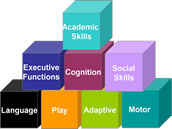
The questions are organized by skill area and listed in chronological order of child development across eight domains:

Language, Play, Adaptive, Motor, Executive Functions, Cognition, Social, and Academic Skills

Answers to the assessment questions are logged in a computerized database which automatically produces simple bar graph reports identifying skills that are in the child’s repertoire versus those that need to be taught. The report is relevant to the child’s age and is summarized according to skills that the child’s same-age peers would exhibit.

Based on this information, specific skills can be targeted. The CARD SKILLS Index directs the child’s behavioral educators to areas of the CARD Curricula© that can be used to teach identified skills. The outcome of this process is that the behavioral educator is able to use the SKILLS Index to develop an age-appropriate comprehensive ABA-based program for the child.

“CARD SKILLS is like no other product because of its comprehensiveness,” said Dr. Doreen Granpeesheh, CARD Founder, Executive Director, and Co-Creator of CARD SKILLS.

“This single package derived from what we know about child development is a one-stop-shop for treatment providers who are developing ABA-based intervention programs for children with autism ages 0 – 8, because once the assessment results are obtained they tie directly to a comprehensive set of curricula. There is no longer the need to decipher what to teach because it is all there for you.”


CARD's Curricula includes lessons to teach skills in each of the eight skill domains assessed in the SKILLS Index.

CARD's Curricula

CARD's Curricula includes eight different areas: Language, Play, Adaptive, Motor, Executive Functions, Cognition, Social, and Academic Skills. Each curriculum is composed of lessons developed to give behavioral educators examples of specific concepts that should be taught. Each lesson provides information such as:
  • Average age ranges for when skills develop
  • Prerequisites necessary before teaching the skills in the lesson
  • Type of nonverbal or verbal operant that is being taught
  • Sample Individual Education Plan (IEP) goals related to the skill
  • Ideas for setting up teaching materials and scenarios
  • Teaching points for ensuring the child’s success in learning targeted skills
  • Ideas for programming for generalization
  • Direction for what to teach next
Taken together, CARD SKILLS, which consists of the CARD E-Learning, SKILLS Index, and CARD's Curricula provide behavioral educators with the knowledge and confidence necessary (with supervision) to implement ABA-based programs for children with autism.

CLICK HERE FOR MORE INFORMATION ABOUT CARD SKILLS ©

Early Intensive Behavioral Treatment Case Study

Early Intensive Behavioral Treatment
for a Toddler with Autism: Case Study of Outcome

By:
Mary Ann Cassell
L. Fernando Guerrero
Jonathan Tarbox
Rachel S. F. Tarbox
Doreen Granpeesheh
Center for Autism and Related Disorders (CARD)


This case study describes the course and outcome of EIBI for a toddler diagnosed with autism who achieved optimal outcomes. The participant in this case received approximately three years of EIBI, addressing complex social skills (e.g., perspective taking, reciprocal social interactions, etc.), and incorporating naturalistic teaching procedures in combination with discrete trial training.

At the conclusion of EIBI, he achieved scores in the normal range on assessments of IQ, language, and adaptive behavior. He is currently placed in a typical kindergarten, is earning average or better report cards with no concerns, and his kindergarten teacher is unaware that he ever had a diagnosis of autism.

View complete case study.

Dr. Doreen Granpeesheh Speaks in Florida

AUTISM EXPERT PRESENTS WHY BEHAVORIAL AND BIOMEDIAL INTERVENTIONS ARE CRITICAL TO GROWTH AND RECOVERY AT NATIONAL AUTISM CONFERENCE

Media Contact:
Daphne Plump November 03, 2008
Center for Autism and Related Disorders, Inc.
19019 Ventura Blvd, Ste 300, Tarzana, CA
(o) 818.345.2345 x 270 / (c) 661.478.6512

Ft. Lauderdale, Florida – Doreen Granpeesheh, PhD, BCBA, Founder and Executive Director of the Center for Autism and Related Disorders, Inc. (CARD) will speak at the National Autism Conference (NAC) on Friday, November 14, 2008, at the Hyatt Regency Hotel in Weston, Florida. Her presentation begins at 3:00pm.
Dr. Granpeesheh, one of the nation’s leading autism researchers and psychologists, will present, “The Child as a Whole: Why Behavioral and Biomedical Interventions are Both Critical to Growth and Recovery.”

Treatment approaches grounded in Applied Behavioral Analysis (ABA) are now considered to be at the forefront of educational interventions for children with autism. However, research supports a biomedical etiology for autism and while studies are conducted to identify exact biomedical pathways, many case studies point to successful outcome with biomedical treatments. While ABA and Biomedical practitioners have individually helped provide successful treatment models for autism, in developing a “Best Practices” Model, Dr. Granpeesheh has discovered these interventions must work together to provide the best possibilities for successful outcomes.

During the presentation, Dr. Granpeesheh will show case studies in support of the behavioral-biomedical treatment model. The recent research she will present will also show successful outcomes with these protocols.

Her presentation will be followed by an evening screening of her award-winning documentary, Recovered: Journeys Through the Autism Spectrum and Back, held in the Hyatt’s amphitheater at 8:30pm. The film tells the story of four children diagnosed with autism, who achieved success using treatments rooted in Applied Behavior Analysis. The documentary includes clips of therapy sessions along with interviews of the children who are now teenagers, their parents, therapists, and Dr. Granpeesheh.

About Dr. Doreen Granpeesheh:
Doreen Granpeesheh, PhD, BCBA is world renowned for her therapy method and recovery rates. She has treated tens of thousands of children with autism in her career and has seen significant recovery rates.

A highly recognized psychologist in the field of autism, Dr. Granpeesheh recently earned one of the Autism Society of America’s highest honors – the Wendy F. Miller National Recognition Award for Professional of the Year (2007). The award recognizes significant contributions made by a psychologist, psychiatrist, physician, and other professionals in the autism field. That same year, Dr. Granpeesheh was elected to the Autism Society of America (ASA) Board of Directors. She also serves on the Defeat Autism Now (DAN!) Executive Council and the US Autism and Aspergers Association (USAAA) Scientific Advisory Board.

“I am truly humbled and gratified to be recognized for the work that CARD does to help children and young adults with autism attain their highest potential,” Dr. Granpeesheh said. “The work we do at CARD is the epitome of a team effort, and so the credit for any recognition that comes our way must go to our hardworking and highly committed therapists, supervisors, and researchers.”

About Center for Autism and Related Disorders, Inc.:
The Center for Autism and Related Disorders, Inc. (CARD) was established in 1990 and is headquartered in Tarzana, California. CARD is among the world's largest and most experienced organizations effectively treating children with autism and related disorders, operating 17 satellite offices throughout the United States and abroad. CARD has treated thousands of children around the world. Its services include assessments, supervision, parent/teacher training and one-to-one therapy.

About Recovered: Journeys Through the Autism Spectrum and Back:
RECOVERED is a newly released documentary by filmmakers Doreen Granpeesheh, PhD, BCBA, and Michele Jaquis. The film won BEST DOCUMENTARY at the Director’s Chair Film Festival 2008, in Staten Island, New York. The documentary ends all debates on whether or not it is possible to recover from autism. This documentary offers a behind the scenes look at the lives of families with children with autism, children on the autism spectrum, and offers unprecedented insight and resources for parents navigating their way around the world of autism. “Our aim in producing this documentary is to provide hope to families of newly diagnosed children that recovery from the Autism Spectrum is indeed possible. It is also our intention to bring awareness of this fact to the general population, medical practitioners and government funding agencies so that the needed support for the treatments of Autism becomes a priority. As an artist I am interested in producing work that engages its audience on an emotional level and sometimes that means delving into difficult subject matter. It is challenging to go back and relive a part of one's life that was difficult, and Doreen and I asked these families to do that. It is my hope that the families who are featured in RECOVERED have found their involvement to be both cathartic and rewarding. “Says Michele Jaquis, Director/Producer/Videographer.


For more information about Recovered: Journeys Through the Autism Spectrum and Back, visit:
www.recoveredautism.com.